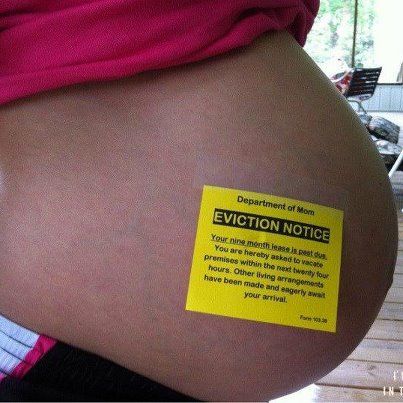
Every so often, I have families get induced at the hospital. Sometimes these inductions are planned, and we’ve had time for those moms to ask me all the questions and I’ve cleared my calendar well ahead of time. Sometimes, there’s a sudden need, and everybody is scrambling. This post is primarily for my clients, so I can send a link with some succinct information when it’s needed, but I’d love it if what I’m writing here is able to help more people! This is not going to be comprehensive, but an overview of the main induction techniques that I see at our local hospitals. I’m including links to more in-depth articles if you want that information!
Bishop Score
Before your induction, your provider will assess your “Bishop Score.” This is simply a rubric that helps discern how ready your cervix is to open up, and how effective various induction methods are likely to be. There are five distinct aspects to your cervix that your provider will be paying attention to:
- Dilation: this refers to how closed or open your cervix is. During pregnancy, your cervix is 0cm, or “closed”, while the main goal of labor is to open up to 10 cm.
- Effacement: before labor, your cervix is about 3.5 to 4 cm long, and a big part of the work of early labor is to get it to “efface,” or thin out. I’m always excited to hear that a cervix is 80 or 90 percent effaced, even if dilation hasn’t taken off yet–a cervix has to thin out before it can melt away and dilate!
- Station: this has to do with where your baby is in relation to your pelvis. ”0″ station would mean that the top of baby’s head is right about behind your pubic bone. Minus numbers (-1, -2, -3) are above that point, while plus numbers are lower. I usually hear -2 or -3 before labor starts.
- Consistency: your cervix might be still quite firm, holding on to keep your baby safe, or it might be soft and ready to mold and thin and stretch.
- Position: every cervix starts off in a posterior position, aiming more towards a mother’s back. In order for labor to be effective, things need to get re-aligned with an anterior cervix.
As your provider gets a feel (literally, and sorry….it’s uncomfortable) for what your cervix is doing in these areas, they will assign scores to each aspect, and total them up. If your Bishop Score is between 8 and 13 points, it’s likely that you will either start labor on your own soon, or an induction is going to go very well. A Bishop Score of 6 to 7 points means a successful induction is iffy. You will want to talk about all of the options and tools available to you. Bishop scores of 5 or lower mean that an induction is going to be more difficult.
Here’s a bit more information about this:
https://www.thebump.com/a/bishop-score
https://perinatology.com/calculators/Bishop%20Score%20Calculator.htm
Cervical Ripeners
If your cervix is still fairly firm and long when your provider checks, you probably don’t want to just jump to pitocin to start trying to crank that open. Everything will go more smoothly and gently if your cervix gets a bit ready first…cue the cervical ripeners. The job of these drugs is just to help your cervix soften and get nice and stretchy so that, if you end up utilizing pitocin, it can be more effective in less time. Typically, I see families going into the hospital the night before their induction, receiving a dose of a cervical ripener, and wished a good night. These do not typically start contractions. They are typically quite passive, and the most annoying thing in a mom’s life is the uncomfortable hospital bed. If you’ve caught on to my use of italics, though, you’re probably realizing that’s not the case 100% of the time. Very rarely, a cervical ripener can cause labor to actually start, and, even more rarely, start strong, so your medical team is likely to feel much happier if you’re snoozing in the hospital where they can respond quickly if you feel more than a need to pee.
I usually see two different types of cervical ripeners used in our area:
- Misoprostol, which is given to you in a pill form that you swallow, and
- Cervidil, which is a pill that is tucked right up in your cervix.
There are pros and cons to each form–Cervidil can be removed if contractions really take off, while Misoprostol tends to lead towards shorter labors. Ask your questions, talk to your doula. This blog post is meant to be the most basic of overviews, but when I’m chatting about these options with my clients, I pull out my fact cards from Evidence Based Birth, and we go over many more details.
Also, I liked this video: https://www.youtube.com/watch?v=aQCSB8t44dU
Foley Bulb
The Foley Bulb catheter is a great next step–either after you have helped your cervix relax a bit with a cervical ripener, or while you’re still on that path–because it does not add to the load of drugs in your system. Essentially, it’s a catheter with a balloon on the end, and that balloon end is threaded up through your cervix (no, it does not feel nice–sorry.), and then the balloon is inflated on the inside. It puts a nice little bit of pressure on your cervix–just like your baby’s head will as they get lower and contractions add some force. The passive pressure from the Foley bulb often will help a Momma dilate to about 3 or 4 cm, and once it’s in, you are likely to only feel mild crampiness at the worst. While using a Foley Bulb may not be your favorite part of getting induced, it’s also really not terrible….and you can get some really helpful progress from it.
More information, should you feel like diving deeper:
https://www.verywellfamily.com/what-is-a-foley-catheter-induction-of-labor-2758962
https://www.babycenter.com/pregnancy/your-body/foley-bulb-induction_40008044
Ok, this is long enough for part one, and we’ve pretty much only covered the prep work to get to actually helping you start contractions. That’s coming in part two, keep your eyes out.
Meanwhile, just to repeat myself:
*This is meant to be the most basic of overviews. You are probably going to want more information. Please talk to your provider, ask lots of questions, and definitely hit up your doula. I’m able to get a lot more information to my clients in person than I can throw out on this blog
*None of this is medical advice. Doulas are not medically trained, but you knew that, right? It still just has to be said.
 Snohomish County Doula
One thought on “Induction 101, Pt 1”